For years, one of the biggest complaints among Namian musicians has been that streaming does not pay enough.
Artists regularly accumulate thousands of streams across various platforms, yet many still struggle to turn their music into a sustainable source of income, but according to Llewellyn Adams, founder of DONLU Africa, the problem is not necessarily the lack of technology or monetisation tools, but rather how artists and consumers engage with them.
Speaking to Unwrap Online this past week, Adams explained how DONLU’s monetisation system, known as the DONLU Africa Monetisation Programme (DAMP), is trying to address some of the challenges that have historically prevented artists from earning meaningful income from digital streaming.
“DAMP operates on a fixed per-stream rate model. Every time a DAMP-enrolled artist receives a verified stream, they earn a guaranteed rate that does not fluctuate based on platform size or global competition,” he said
Under the current system, Artist Free accounts earn N$0.00108 per verified stream while Artist Pro accounts earn N$0.00243 per stream. DONLU retains 10% while creators receive 90% directly into their DAMP Studio balance.The platform also uses what it calls a User-Centric Payment System (UCPS), which distributes a subscriber’s monthly contribution only to the artists they personally listened to during that month.
Adams added that this differs from many international streaming services where subscription revenue is pooled and distributed across a massive global catalogue.
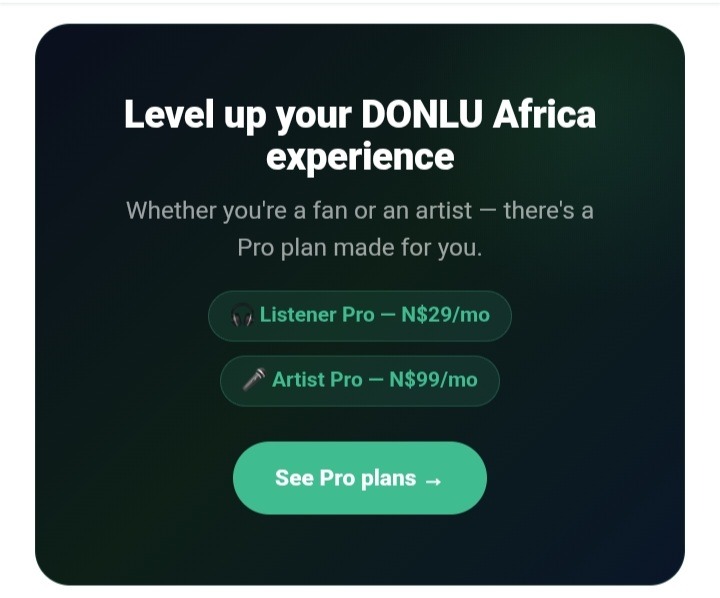
“When a listener can see exactly what their N$29 monthly subscription does, specifically how much goes directly to the artists they personally listened to, the value proposition becomes personal,” he said.
Why Artists Are Still Struggling?
While many musicians often blame streaming platforms for poor earnings, but Adams believes several factors contribute to the problem.
One of the biggest issues is that many artists fail to complete the necessary verification processes required for monetisation.
“Artists need to actively enrol in DAMP and complete identity verification before any stream generates earnings. Many artists upload their music and assume monetisation happens automatically. It does not,” he said
Another challenge is simply volume. Even with monetisation in place, artists need tens of thousands of streams before they begin seeing significant monthly income. Adams said this requires more than just releasing music.
“Meaningful monthly income requires consistent output, audience building and sustained promotion, which most independent artists have not yet built into their workflow.”
He added that Namibia’s digital payment culture is still developing. While free streaming remains popular, convincing consumers to pay for music remains a long-term challenge.
“Namibia, like most African markets, developed its digital habits on free platforms. That shaped expectations early and deeply.”
Why African Platforms Matter
The rise of Spotify, Apple Music and YouTube has given African artists unprecedented access to global audiences. However, Adams argues that these platforms were not built with African markets in mind.
“Those platforms were not built for this market, and their payout structures reflect that,” he said.
He added that many global streaming services use a pro-rata model where artists compete against billions of streams worldwide for a share of revenue.
“An independent African artist with 100,000 streams on those platforms can earn the equivalent of less than N$30. The system is not designed to sustain artists operating at our market scale,” Adams explained.
He believes African-owned platforms have an important role to play in ensuring that more revenue remains within local creative economies.
“A platform built here, owned here and operated here reinvests into the ecosystem and keeps economic value on the continent.”
Common Mistakes Artists Make
Adams also pointed to several mistakes local artists continue to make when it comes to digital business.
“The most common mistake is treating streaming as passive,” he said.
According to Adams, streaming revenue is directly linked to consistent promotion, audience engagement and regular content releases.
He also warned that many artists fail to understand the difference between streams and monetised streams.On DONLU, only DAMP-verified streams generate earnings. Artists who have not completed verification may accumulate stream numbers without earning income.
Beyond streaming, Adams believes many artists are also neglecting publishing and royalty registration.
“Many local artists have never registered their works with SAMRO or NASCAM, which means they are missing performance royalty income entirely.”
He added that some artists unknowingly sign away publishing rights or ownership of their master recordings without fully understanding the long-term consequences.
Can Streaming Support Full-Time Careers?
Asked whether Namibia’s music industry is ready to support full-time careers through streaming alone, Adams offered a realistic assessment.
“Honestly, we are not there yet for most artists, but the gap is closing faster than people realise.”
He said platforms and monetisation systems are becoming more sophisticated, but artists still need to diversify their income.
“Full-time income from streaming requires either very large stream counts or a diversified model that combines streaming revenue with bookings, sync licensing, merchandise and live performance.”
In other words, streaming should be viewed as one part of a larger business strategy rather than the sole source of income.
A New Opportunity For DJs
One of DONLU’s newest initiatives focuses on DJs, a group Adams believes has often been overlooked by the global streaming industry.
“The DJ problem is one that the global streaming industry has simply ignored,” he said.
Under DONLU’s DJ monetisation model, earnings from a qualifying stream are automatically split between the DJ and the artists featured in the mix. DONLU retains 10%, DJs receive 60%, while 40% is distributed proportionally among the tagged artists.
“We built it in because DJs are central to how African music moves, and they deserve to be treated as part of the creator economy.”
Looking Beyond Namibia
DONLU has already expanded beyond Namibia into markets including South Africa, Angola, Zambia, Zimbabwe and Botswana.
Adams says his vision is to create a continental platform where artists can reach audiences across Africa while maintaining ownership of their work and earning from every verified stream.
“Five years from now, the goal is a platform where an artist in Windhoek, Lagos, Accra or Nairobi uploads their music and immediately reaches an audience across the continent.”
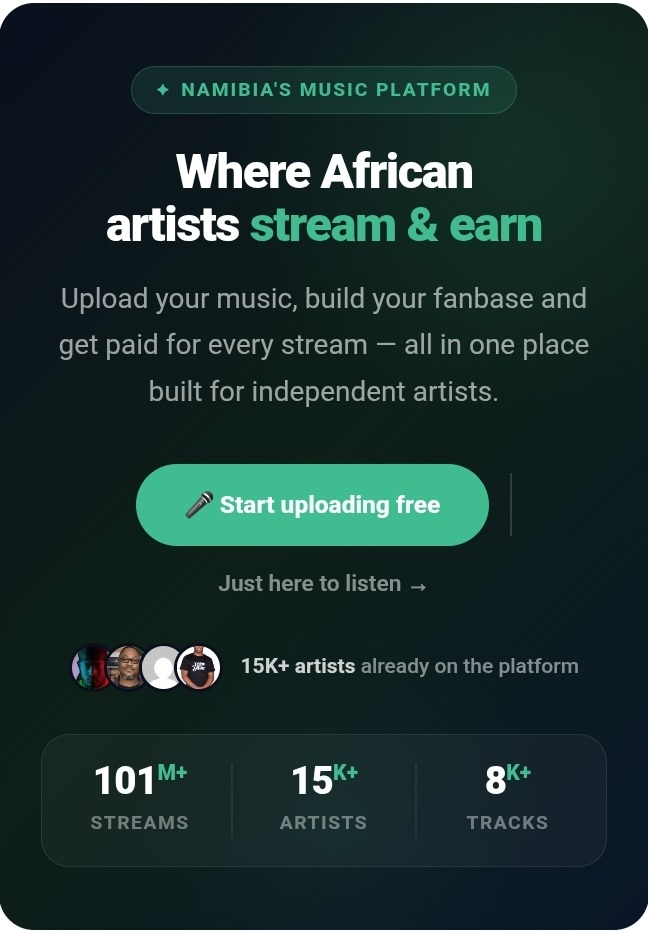
The company reports that its platform has already surpassed 101 million streams and hosts around 15,000 independent artists.
For Adams, the future of African music monetisation will depend not only on technology, but also on artists becoming more business-minded and consumers becoming more willing to support creators through paid subscriptions.
“The foundation is there, What comes next depends on how many artists take the tools seriously and how many consumers make the shift to paid listening.” He concluded.